
The efficiency of industrial heat treatment, particularly in cement and lime rotary kilns, fundamentally depends on controlling the heat flux through the refractory lining. Microporous insulation materials have emerged as a critical engineering solution to address the inherent thermodynamic challenges of these high-temperature environments. For plant owners and technical managers, the primary objective is to minimize energy loss while maintaining structural integrity throughout extended production cycles.Conventional insulation materials often reach their physical limits at temperatures exceeding 800°C, where radiation becomes the primary heat transfer mechanism.
Engineering teams select microporous insulation not only for its low thermal conductivity but also for its ability to reduce overall lining system thickness without compromising the cold-side temperature of the kiln shell. This trend toward thinner, more efficient insulation increases internal kiln volume, directly boosting production capacity and profitability.However, selecting the appropriate material requires a deep understanding of how these specialized structures perform under the combined effects of thermal cycling, mechanical vibration, and atmospheric chemical reactions.
Technical Background and Scope of High-Temperature Insulation
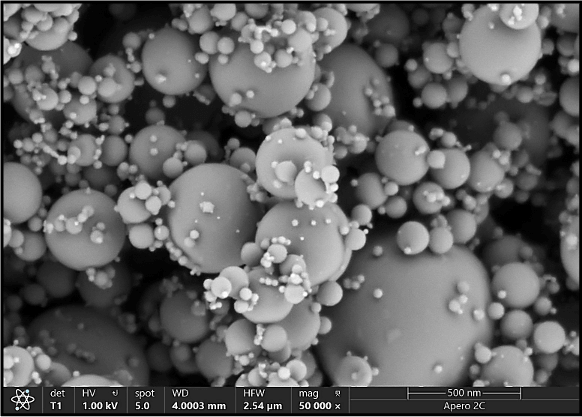
In industrial furnace design, microporous insulation materials refer to those with pore structures smaller than the mean free path of air molecules under standard atmospheric pressure. Traditional insulators like ceramic fibers or calcium silicate rely on trapping air within larger macropores, whereas microporous materials utilize a dense silica matrix to suppress convection and gas conduction at the molecular level.
These materials must be distinguished from standard refractory bricks or lightweight insulating bricks. While insulating bricks provide structural support, they exhibit relatively high thermal conductivity. In contrast, microporous boards serve as purely functional insulation layers, designed as “backing” layers positioned between the working refractory material and the outer steel shell.This article focuses on rigid and semi-flexible microporous boards for stationary and rotating industrial equipment. Since the principles of cryogenic insulation or low-temperature building insulation differ significantly from microporous boards, this article does not address those applications.
Engineers must also consider the compatibility of these materials with [[INTERNAL: Secondary Lining Components | Evaluating Chemical Interactions Between Insulation and Refractory Bricks]] to prevent premature degradation of the lining system.
Principles of Microporous Thermal Suppression Technology
The exceptional performance of microporous insulation materials stems from three synchronized heat transfer suppression mechanisms. Understanding these principles helps engineers predict material behavior at temperatures approaching 1000°C.
1. Suppression of Gas Conduction
In standard porous media, heat transfers via collisions between gas molecules. Microporous materials utilize gas-phase silica with pore sizes typically ranging from 20 to 50 nanometers. Since this pore size is smaller than air’s mean free path (approximately 67 nanometers at room temperature), gas molecules collide with the material walls far more frequently than they collide with each other. This effectively “suppresses” the gas’s ability to conduct heat.
2. Elimination of Convection
In larger voids, temperature gradients drive air circulation, forming convection loops that transfer heat from high-temperature surfaces to low-temperature surfaces. Within microporous structures, however, the voids are too small to support such convection. Consequently, regardless of the insulation material’s orientation, the convective component in the overall thermal conductivity is virtually negligible.
3. Radiation Blocking
At temperatures above 500°C, thermal radiation (infrared rays) becomes the primary source of heat loss.To address this, light-blocking agents—typically titanium dioxide or zirconium silicate—are incorporated into microporous insulation materials. These minerals reflect and scatter infrared radiation, preventing its penetration deep into the material. This represents a fundamental difference from standard fiberboard, which often becomes “transparent” to infrared radiation at high temperatures.
Further insights into these mechanisms can be found in the discussion comparing the performance of silica-based insulation materials versus alumina-based insulation materials at 1000°C.
Key Variables in Practical Engineering Applications
The theoretical performance of microporous insulation must be reconciled with variables in actual operating plants. Multiple parameters determine whether the material maintains its specified R-value throughout its service life.
-
Compression and Mechanical Loading: Microporous materials are highly sensitive to point loads. In rotary kilns, mechanical movement of the kiln shell imposes significant pressure on the backing insulation. Excessive compression collapses the nanoporous structure, leading to localized increases in thermal conductivity.
-
Operating Environment: The presence of moisture or chemical vapors affects the silica matrix. While fumed silica is chemically stable, prolonged exposure to high-pressure steam or certain alkaline vapors can cause pore sintering, reducing the material’s effectiveness.
-
Temperature Gradient: The “hot face” temperature of insulation panels differs from the kiln’s internal temperature. Engineers must calculate the thermal gradient of the working lining to ensure insulation temperatures do not exceed continuous service temperatures, typically ranging from 950°C to 1100°C.
To rigorously calculate these variables, engineers frequently reference established standards such as [[External: ASTM C167 | Standard Test Methods for Thickness and Density of Blanket or Cotton-Type Insulating Materials]] to ensure consistency in material density and thermal insulation performance.
Common Misconceptions and Failure Modes
A common error in industrial insulation specifications is assuming “lower density equals better insulation.” While true for some fiber blankets, microporous materials require specific densities to optimize shading agent distribution. Too low a density reduces radiation suppression; too high a density increases solid-state conduction through the silica skeleton.
Another common failure mode is the “sintering effect.”When microporous boards are exposed to temperatures exceeding their rated limits, the silica particles in the gas phase begin to melt, causing irreversible shrinkage. In rotary kilns, this contraction of the backing layer creates gaps between refractory bricks, forming “hot spots” on the kiln shell. These hot spots lead to shell deformation, necessitating costly downtime and structural repairs.
The risk of such failures underscores the importance of [[INTERNAL: Installation Best Practices | Proper techniques for staggered joint installation and controlling thermal expansion of backing insulation materials]].
Evaluation and Selection Criteria
When evaluating microporous insulation materials for specific projects, technical managers should look beyond the “initial thermal conductivity” (k-value) listed in datasheets and focus on long-term performance metrics.
-
Thermal Stability (Linear Shrinkage): After a 24-hour soak test at maximum operating temperature, linear shrinkage should be less than 1-2%.
-
Specific Heat Capacity: In intermittent processes or kilns with frequent cycling, a lower specific heat capacity is preferable for faster heating and cooling, though this is typically balanced against the density required to suppress radiation.
-
Hydrophobicity: Since industrial sites are often exposed to various natural elements during construction or renovation phases, specifying hydrophobic-grade microporous boards prevents moisture absorption that could otherwise compromise the material’s structure during initial heating.
-
Flexibility vs. Rigidity: For curved kiln shells in rotary kilns, semi-flexible “strip” plates or flexible underlayment generally outperform rigid plates by conforming to curves without cracking.
Brand Implementation Case: Correfire Refractories
In the realm of high-performance insulation materials, Correfire Refractories demonstrates how these engineering standards translate into industrial products. Their strategy for microporous solutions combines high-purity fumed silica with advanced infrared blockers engineered for the cement and lime industries.
By rigorously controlling particle size distribution within the silica matrix, this approach demonstrates how consistent pore geometry can be achieved at industrial scale. This compliance with technical standards ensures the material operates stably under the mechanical vibrations and thermal loads typical of heavy-duty industrial kilns, providing a stable support layer that extends the service life of the primary refractory lining.
Summary and Engineering Highlights
Effective utilization of microporous insulation materials is a prerequisite for modernizing high-temperature industrial processes. By shifting thermal management from the macro to the micro level, plants can achieve significant energy savings and extend equipment lifespan.
-
Prioritize radiation control: At temperatures above 800°C, the selection of shading agents in insulation is as critical as pore size.
-
Account for shrinkage: Always specify materials based on their heated dimensions to prevent bypass gaps in the lining.
-
Evaluate the system, not just the material: Thermal insulation performance is inseparable from the refractory material it supports; ensure chemical and mechanical compatibility between layers.
-
Monitor shell temperatures: Use infrared thermal imaging to verify insulation system performance in real time, identifying areas prone to compression or sintering.
Next, engineers should examine the specific thermal gradient distribution of their current lining system to determine whether reducing insulation thickness could increase refractory thickness or internal kiln volume.