Key Answer
What this article covers
Silica fume and fly ash are two common supplementary cementitious materials used in concrete. Both materials can improve concrete performance. They react with products from cement hydration, make the concrete structure denser, and help reduce permeability. However, silica fume and fly ash…
Start from the application target, then match SiO2, moisture, LOI, bulk density and fineness.
Performance depends on formula, dosage, dispersion and site process, so sample testing is recommended.
For purchasing, check batch stability, COA support, packaging and long-term supply capability.
Silica fume and fly ash are two common supplementary cementitious materials used in concrete.
Both materials can improve concrete performance. They react with products from cement hydration, make the concrete structure denser, and help reduce permeability.
However, silica fume and fly ash are not the same material, and they do not perform the same job.
Silica fume works best when a concrete mix needs:
- high strength,
- very low permeability,
- strong resistance to chloride penetration,
- better bond between cement paste and aggregate,
- or high durability in severe environments.
Fly ash, by contrast, often helps when a concrete mix needs:
- better workability,
- lower heat of hydration,
- lower water demand,
- higher cement replacement,
- or better long-term strength.
Therefore, the key question is not:
“Is silica fume better than fly ash?”
A better question is:
“Which material is better for the performance target of the concrete?”
In some projects, the best solution is to use silica fume and fly ash together.
Silica Fume vs Fly Ash at a Glance
| Property | Silica Fume | Fly Ash |
|---|---|---|
| Main source | Silicon or ferrosilicon production | Coal-fired power generation |
| Main components | Mainly amorphous SiO₂ | SiO₂, Al₂O₃, Fe₂O₃, CaO, and other minerals |
| Typical particle size | Around 0.1 μm | Much larger and more variable |
| Reactivity | Very high | Moderate to high |
| Typical dosage | About 4–15% | Often about 15–30% |
| Early strength | Usually increases | May decrease at high replacement levels |
| Later strength | High | Often very good |
| Workability | Makes the mix more cohesive | Often improves flow |
| Water demand | May increase | May decrease |
| Bleeding | Strongly reduces bleeding | Can reduce bleeding |
| Permeability | Excellent reduction | Good long-term reduction |
| Chloride resistance | Excellent | Good to excellent |
| Heat reduction | Limited benefit | Strong benefit |
| Typical use | HPC, UHPC, marine, bridge, precast | Mass concrete, ready-mix, pavements, foundations |
| Typical role | Performance enhancer | Higher-volume cement replacement |
The table shows an important point: these two materials have different roles.
Silica fume usually acts as a high-performance additive at a relatively low dosage.
Fly ash usually replaces a larger amount of Portland cement.
What Is Silica Fume?
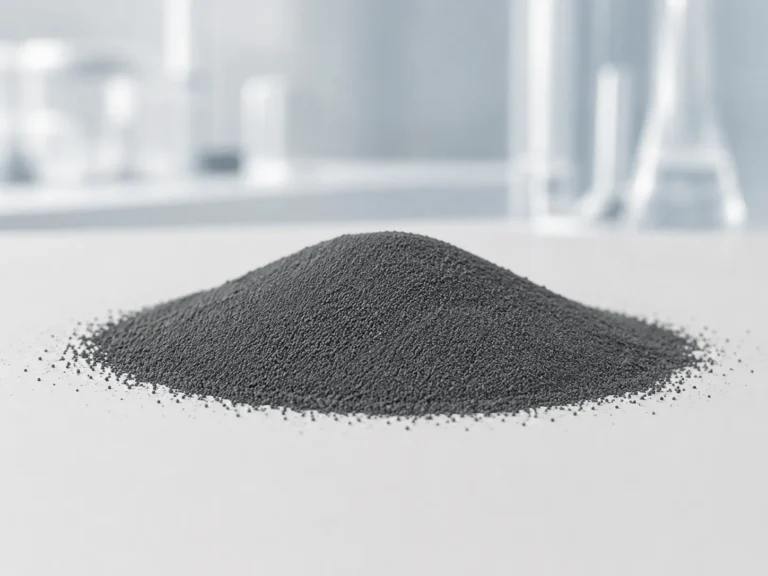
Silica fume, also called microsilica, is an ultrafine powder.
Manufacturers collect it during the production of silicon metal and ferrosilicon alloys.
One of its most important features is its very small particle size.
A typical silica fume particle is about 0.1 micrometers in diameter. As a result, silica fume particles are much smaller than normal Portland cement particles.
This very fine size gives silica fume two important functions in concrete:
- Microfilling
- Pozzolanic reaction
Together, these effects help produce stronger and denser concrete.
How Does Silica Fume Work in Concrete?
When Portland cement reacts with water, it forms several hydration products.
One of the most important is calcium silicate hydrate, usually called C-S-H. This material provides much of the strength in hardened cement paste.
Cement hydration also produces calcium hydroxide, or Ca(OH)₂.
Silica fume contains a high amount of reactive amorphous silica. Therefore, it can react with calcium hydroxide and water to form more C-S-H.
In a simple form:
Reactive SiO₂ + Ca(OH)₂ + H₂O → additional C-S-H
This reaction improves the cement paste in two ways.
First, it uses part of the calcium hydroxide.
Second, it creates more useful cementing products.
In addition, the very fine silica fume particles fill small spaces between cement grains.
As a result, the concrete develops a denser internal structure with fewer connected pores.
This combination of chemical reaction and physical filling explains why silica fume can strongly improve strength and durability.
What Is Fly Ash?
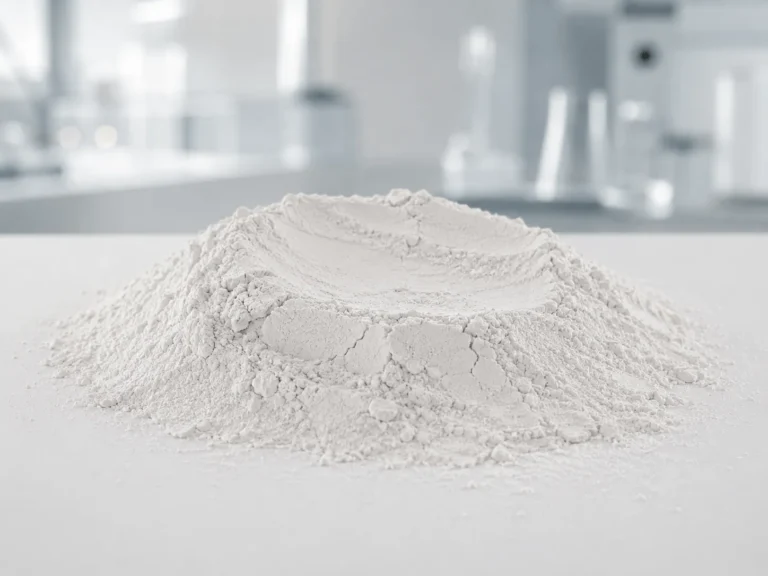
Fly ash is a fine mineral powder that comes from coal combustion.
Power plants collect it from the gases produced when pulverized coal burns at high temperatures.
Its composition can include:
- silicon dioxide,
- aluminum oxide,
- iron oxide,
- calcium oxide,
- and other mineral components.
However, fly ash varies much more than silica fume.
Its performance depends on several factors, such as:
- coal source,
- calcium content,
- fineness,
- glass content,
- loss on ignition,
- combustion conditions,
- and production consistency.
Therefore, two fly ashes from different sources can perform very differently in concrete.
How Does Fly Ash Work in Concrete?
Fly ash also takes part in pozzolanic reactions.
Reactive silica and alumina in the fly ash react with products from Portland cement hydration. Over time, these reactions form additional cementing compounds.
However, the reaction usually develops more slowly than the reaction of silica fume.
Because of this slower process, fly ash may contribute less to early strength.
On the other hand, it can continue to improve the concrete at later ages.
This difference gives the two materials different strengths:
Silica fume often improves concrete earlier.
Fly ash often gives more gradual long-term benefits.
1. Chemical Composition
The first major difference between silica fume and fly ash is their chemistry.
Silica Fume
Silica fume mainly contains amorphous silicon dioxide, or SiO₂.
Concrete-grade silica fume often contains a high level of reactive silica. This high silica content is one reason for its strong pozzolanic activity.
Fly Ash
Fly ash has a more complex chemical composition.
It usually contains different amounts of:
- SiO₂,
- Al₂O₃,
- Fe₂O₃,
- CaO,
- and other oxides.
The exact chemistry depends on the coal source and the power plant process.
As a result, fly ash performance can vary more from one source to another.
Why Does This Matter?
Silica fume acts as a concentrated source of reactive silica.
Fly ash, in contrast, acts as a broader mineral system with more variation.
Therefore, silica fume selection often focuses on silica content, fineness, and consistency.
For fly ash, buyers should pay more attention to the full chemical profile and source stability.
2. Particle Size
Particle size is one of the biggest differences between silica fume and fly ash.
Silica Fume Is Extremely Fine
Typical silica fume particles are around 0.1 μm.
Because the particles are so small, they can enter spaces that larger cement particles cannot fill.
This helps:
- reduce pore size,
- improve particle packing,
- make the cement paste denser,
- strengthen the paste-aggregate interface,
- and reduce paths for water and ions.
Therefore, silica fume has a strong effect on permeability.
Fly Ash Has Larger Particles
Fly ash particles are usually much larger than silica fume particles.
Still, many fly ash particles have a smooth and rounded shape.
This shape can reduce friction between particles in fresh concrete.
As a result, good-quality fly ash often improves flow and pumpability.
So, the difference is simple:
Silica fume mainly improves density.
Fly ash often improves flow.
3. Pozzolanic Reactivity
Both silica fume and fly ash are pozzolanic materials.
However, they react at different speeds.
Silica Fume Reacts Faster
Silica fume combines:
- very small particles,
- high surface area,
- and a high level of reactive silica.
Because of this, it usually reacts faster than fly ash.
It also improves the microstructure at an early stage.
Therefore, engineers often use silica fume in:
- high-strength concrete,
- high-performance concrete,
- UHPC,
- precast concrete,
- bridge structures,
- marine concrete,
- and severe-exposure applications.
Fly Ash Reacts More Slowly
Fly ash usually needs more time to develop its full effect.
For example, some low-calcium fly ashes may reduce early strength when they replace a large amount of Portland cement.
However, strength can continue to rise at later ages.
Therefore, fly ash often works well when early strength is less important than long-term performance.
4. Effect on Concrete Strength
Strength is one of the main reasons engineers compare silica fume and fly ash.
However, it is important to separate early strength from later-age strength.
Early Strength
Silica fume usually has the advantage when early strength matters.
Its fine particles improve packing, while its high reactivity helps develop a dense paste structure.
For this reason, engineers often use it in:
- high-strength precast concrete,
- fast production cycles,
- bridge elements,
- high-strength columns,
- and UHPC.
Fly ash often develops strength more slowly.
Therefore, a high fly ash replacement level may reduce early strength.
Later-Age Strength
At later ages, the gap may become smaller.
Fly ash can continue to react over time and help form additional cementing products.
As a result, well-designed fly ash concrete can reach very good long-term strength.
A simple rule is:
For high early strength and very high strength, silica fume usually performs better.
For good long-term strength at a lower binder cost, fly ash can be very effective.
5. Workability and Water Demand
Fresh concrete behavior shows another clear difference between the two materials.
Silica Fume
Silica fume has a very high surface area.
Therefore, the mix must wet a much larger particle surface.
As a result, silica fume concrete often becomes:
- more cohesive,
- more viscous,
- less prone to bleeding,
- and more dependent on chemical admixtures.
For this reason, many silica fume mixes use a high-range water reducer or superplasticizer.
Adding more water is usually not a good solution.
Higher water content can raise the water-to-binder ratio and reduce both strength and durability.
Fly Ash
Fly ash often has the opposite effect.
Its rounded particles can help the fresh concrete flow more easily.
Therefore, suitable fly ash can:
- improve workability,
- improve pumpability,
- reduce friction,
- and lower water demand for the same slump.
This makes fly ash useful in ready-mix concrete and large concrete placements.
6. Permeability and Chloride Resistance
For many structures, low permeability matters more than very high compressive strength.
This is especially true for:
- marine structures,
- bridge decks,
- ports,
- coastal buildings,
- parking structures,
- tunnels,
- and concrete exposed to deicing salts.
Both silica fume and fly ash can reduce permeability.
However, silica fume usually produces a faster and stronger reduction.
Its fine particles fill very small spaces, while the pozzolanic reaction creates more C-S-H.
As a result, water and chloride ions have fewer connected paths through the concrete.
Fly ash can also improve permeability over time.
However, the effect usually develops more slowly.
Therefore:
For extremely low permeability, silica fume often has the advantage.
For good long-term durability and higher cement replacement, fly ash can be a strong option.
For demanding projects, engineers may combine both materials.
7. Heat of Hydration
Fly ash has a clear advantage when temperature control matters.
Replacing part of Portland cement with fly ash usually lowers the early heat output of the concrete.
Therefore, engineers often use fly ash in:
- dams,
- raft foundations,
- thick foundations,
- large bridge piers,
- massive concrete blocks,
- and other mass concrete structures.
Lower heat can reduce the temperature difference between the inside and outside of the structure.
As a result, the risk of thermal cracking can fall.
Silica fume usually serves a different purpose.
Engineers mainly use it to improve:
- strength,
- density,
- durability,
- and resistance to penetration.
Therefore, if heat control is the main goal, fly ash usually offers more benefit.
8. Bleeding, Cohesion, and Finishing
Silica fume strongly changes fresh concrete behavior.
Because of its very fine particles, it greatly reduces bleeding.
This can provide several benefits:
- less segregation,
- better uniformity,
- stronger paste-aggregate contact,
- and fewer bleed-water channels.
However, low bleeding also creates a construction challenge.
The concrete surface may lose moisture quickly, especially in hot, dry, or windy weather.
Therefore, contractors need to pay close attention to finishing and early curing.
Poor curing can increase the risk of plastic shrinkage cracks.
In practice, a good silica fume mix needs both a good mix design and good site control.
9. ASR and Sulfate Resistance
Silica fume and suitable fly ash can both improve resistance to some durability problems.
For example, they may help reduce the risk of alkali-silica reaction, or ASR.
They can improve resistance by:
- refining the pore structure,
- changing pore solution chemistry,
- reducing permeability,
- and changing the amount of available alkalis.
Silica fume can work at a relatively low dosage because of its high reactivity.
Fly ash can also perform very well, especially when the material has suitable chemistry.
However, fly ash performance depends strongly on:
- calcium content,
- chemical composition,
- dosage,
- cement chemistry,
- aggregate type,
- and exposure conditions.
Therefore, engineers should confirm the final mix through testing when ASR or sulfate attack is a serious concern.
10. Typical Dosage
Silica fume and fly ash use very different dosage ranges.
This is one reason why they should not replace each other on a simple 1:1 basis.
Typical Silica Fume Dosage
A common silica fume dosage is about:
4–15% of the cementitious material
The exact level depends on the required concrete performance.
Typical Fly Ash Dosage
A common fly ash replacement level is about:
15–30% of Portland cement
Some mass concrete and specially designed mixes may use even higher levels.
Therefore, a mix designer should not compare the two materials by percentage alone.
11. Why Silica Fume and Fly Ash Cannot Replace Each Other 1:1
A common mistake is to assume that 10% silica fume equals 10% fly ash.
It does not.
The two materials differ in:
- particle size,
- surface area,
- reactivity,
- water demand,
- normal dosage,
- setting behavior,
- early strength,
- and permeability reduction.
For example, replacing 20% fly ash with 20% silica fume could make the mix much more sticky and increase admixture demand.
On the other hand, replacing 10% silica fume with 10% normal fly ash could reduce early strength and increase permeability.
Therefore, engineers should redesign and retest the concrete when they change from one SCM to another.
12. Silica Fume vs Fly Ash for High-Strength Concrete
For very high-strength concrete, silica fume usually offers the stronger technical advantage.
Its fine particles help improve packing.
At the same time, its pozzolanic reaction improves the cement paste and the interface around aggregates.
Therefore, silica fume often appears in:
- HPC,
- UHPC,
- high-strength precast concrete,
- bridge structures,
- and high-durability concrete.
However, fly ash can still play an important role in high-strength mixes.
A ternary binder may include:
Portland cement + fly ash + silica fume
Each material then performs a different job.
Portland cement provides the main hydraulic reaction.
Silica fume improves early density, strength, and permeability.
Fly ash can improve workability, lower heat, reduce cement use, and support later strength.
As a result, the combined system can offer better overall balance.
13. Can Silica Fume and Fly Ash Be Used Together?
Yes.
In fact, many high-performance concrete mixes can benefit from using both.
Silica fume and fly ash often complement each other.
Silica fume may make a mix more sticky. Fly ash can help improve flow.
Meanwhile, some fly ash reacts slowly at early ages. Silica fume can help improve early density and strength.
Therefore, a well-designed ternary system may provide:
- good workability,
- high strength,
- low permeability,
- lower heat,
- good later-age performance,
- and lower Portland cement use.
So, in some projects, the best question is not:
“Should I use silica fume or fly ash?”
Instead, ask:
“What combination of silica fume and fly ash gives the best overall performance?”
14. Silica Fume vs Fly Ash by Application
| Application | Preferred Choice |
|---|---|
| UHPC | Silica fume |
| Very high-strength concrete | Silica fume |
| Marine concrete | Silica fume or silica fume + fly ash |
| Bridge decks | Silica fume or ternary blend |
| Chloride-exposed concrete | Silica fume or ternary blend |
| Mass concrete | Fly ash |
| Large foundations | Fly ash |
| Pumped ready-mix concrete | Fly ash often helps |
| High cement replacement | Fly ash |
| High-strength precast | Silica fume |
| Self-compacting concrete | Fly ash, silica fume, or both |
| General structural concrete | Fly ash often offers better economy |
| High-durability HPC | Silica fume or ternary blend |
These are general guidelines.
Final selection should depend on:
- cement type,
- aggregate,
- admixtures,
- water-to-binder ratio,
- curing,
- exposure,
- and required performance.
15. Cost: Silica Fume vs Fly Ash
Silica fume usually costs more per tonne than conventional fly ash.
However, price per tonne does not tell the full story.
Silica fume usually works at a much lower dosage.
More importantly, engineers often use it to achieve performance that a normal fly ash mix may not reach at the same dosage.
For example, silica fume may help a project achieve:
- very low chloride permeability,
- very high strength,
- high durability,
- or UHPC performance.
Therefore, the better question is not:
“Which powder is cheaper?”
Instead, ask:
“Which mix reaches the required performance at the best total cost?”
Fly ash often offers a cost advantage when the goal is to replace a larger amount of Portland cement.
Silica fume often offers more value when a small dosage can produce a major improvement in performance.
16. How to Choose Between Silica Fume and Fly Ash
Before choosing an SCM, define the main performance target.
Do You Need High Early Strength?
If yes, silica fume usually offers more benefit.
Do You Need Very Low Permeability?
Silica fume is often the stronger choice.
Is It Mass Concrete?
Fly ash usually offers better heat control.
Is Workability Important?
A suitable fly ash can improve flow and pumpability.
Do You Want to Replace More Portland Cement?
Fly ash usually allows a higher replacement level.
Is the Concrete Exposed to Chlorides?
Silica fume or a ternary blend deserves strong consideration.
Do You Need Several Benefits at the Same Time?
Then do not limit the design to one SCM.
A cement + fly ash + silica fume system may provide better balance.
17. What Should Buyers Check When Buying Silica Fume?
Silica fume products can differ in quality and supply form.
Therefore, buyers should check:
- SiO₂ content,
- loss on ignition,
- moisture,
- fineness,
- pozzolanic activity,
- bulk density,
- product consistency,
- densified or undensified form,
- relevant ASTM or EN requirements,
- packaging,
- and batch test documents.
Bulk density also matters for transport and handling.
18. Densified vs Undensified Silica Fume
Silica fume usually comes in two main forms:
- Densified Silica Fume
- Undensified Silica Fume
Densified Silica Fume
Densification raises the bulk density of the material.
As a result, it can:
- reduce transport volume,
- improve container loading,
- lower storage space,
- reduce dust,
- and simplify bulk handling.
However, the concrete plant needs enough mixing energy to break down and disperse the agglomerates.
Undensified Silica Fume
Undensified silica fume has a much lower bulk density.
It may disperse more easily in some systems.
However, it takes up more transport and storage space.
Therefore, the best choice depends on both concrete performance and plant handling conditions.
19. What Should Buyers Check When Buying Fly Ash?
Fly ash quality can vary greatly between sources.
Buyers should pay attention to:
- fly ash class,
- chemical composition,
- calcium content,
- fineness,
- loss on ignition,
- moisture,
- strength activity,
- sulfate content,
- batch consistency,
- and admixture compatibility.
Source stability is especially important for long-term projects.
A fly ash that performs well in one batch should continue to deliver similar performance in future batches.
20. Final Comparison: Which Is Better?
Silica fume and fly ash both improve concrete, but they do so in different ways.
Silica Fume Is Best for High Performance
Its main strengths include:
- very fine particles,
- high reactivity,
- strong microfilling effect,
- lower permeability,
- higher strength,
- and better durability in severe environments.
Therefore, silica fume is a strong choice for:
HPC, UHPC, marine concrete, bridges, high-strength precast, and low-permeability concrete.
Fly Ash Is Best for Higher Cement Replacement
Its main strengths include:
- good workability,
- lower heat of hydration,
- lower water demand,
- good later-age strength,
- higher cement replacement,
- and good overall economy.
Therefore, fly ash works well in:
ready-mix concrete, mass concrete, foundations, pavements, and general structural concrete.
Simple Selection Rule
If you need:
High strength + low permeability + high durability
choose:
Silica fume
If you need:
Lower heat + better workability + higher cement replacement
choose:
Fly ash
If you need:
High performance + good workability + better overall balance
consider:
Cement + fly ash + silica fume
Ultimately, the best SCM is the one that helps the finished concrete meet its real performance targets.
Frequently Asked Questions
Is silica fume the same as fly ash?
No.
Both materials can improve concrete, but they come from different industrial processes and have different chemistry, particle size, reactivity, and dosage ranges.
Silica fume comes from silicon or ferrosilicon production.
Fly ash comes mainly from coal-fired power generation.
What is the difference between microsilica and fly ash?
Microsilica is another common name for silica fume.
It has much smaller particles than fly ash and usually has higher pozzolanic reactivity.
Therefore, engineers often use microsilica to improve strength, density, and permeability.
Fly ash, meanwhile, often improves workability, lowers heat, and replaces more Portland cement.
Which is better for strength: silica fume or fly ash?
Silica fume usually provides a stronger benefit for early strength and very high-strength concrete.
Fly ash develops its contribution more slowly.
However, good fly ash concrete can reach excellent later-age strength.
Which is better for reducing permeability?
Silica fume usually provides a stronger and faster reduction in permeability.
Its ultrafine particles and high reactivity help create a dense concrete structure.
Fly ash can also reduce permeability, especially at later ages.
Which is better for workability?
Fly ash usually improves workability more than silica fume.
Its rounded particles can improve flow and pumpability.
Silica fume, by contrast, tends to make concrete more cohesive and can increase admixture demand.
Which is better for mass concrete?
Fly ash is usually the better choice when the main goal is to lower heat of hydration.
Therefore, engineers often use it in thick foundations, dams, large bridge piers, and other mass concrete structures.
Can silica fume replace fly ash?
Not on a simple 1:1 basis.
The two materials have different particle sizes, reactivity, water demand, dosage ranges, and effects on fresh and hardened concrete.
Therefore, changing from fly ash to silica fume requires a new mix design.
Can fly ash replace silica fume?
Not directly.
If the original mix uses silica fume to achieve very low permeability, high early strength, or UHPC performance, normal fly ash may not deliver the same result at the same dosage.
The mix should be redesigned and tested.
Can silica fume and fly ash be used together?
Yes.
In many cases, using both can create a better-balanced concrete mix.
Fly ash can improve workability and lower heat.
At the same time, silica fume can improve density, strength, and resistance to penetration.
What is the normal silica fume dosage in concrete?
A common silica fume dosage is about:
4–15% of the cementitious material.
The best level depends on the mix design and the required performance.
What is the normal fly ash dosage in concrete?
A common fly ash replacement level is about:
15–30% of Portland cement.
Mass concrete and specially designed mixes may use higher replacement levels.
Which SCM is better for high-performance concrete?
If the main goals are high strength, low permeability, and strong chloride resistance, silica fume often offers more value.
However, if the mix also needs better workability, lower heat, and higher cement replacement, a combination of fly ash and silica fume may provide the best overall result.
MSILI Silica Fume Solutions
MSILI supplies both densified and undensified silica fume for concrete and industrial applications.
Different projects may require different silica contents, bulk densities, packing forms, and handling properties.
Therefore, silica fume selection should consider more than SiO₂ content alone.
Important factors include:
- target concrete strength,
- permeability requirements,
- silica fume dosage,
- mixing equipment,
- bulk density,
- packing method,
- and transport conditions.
MSILI offers multiple silica fume grades for high-strength concrete, high-performance concrete, UHPC, marine concrete, precast products, and other demanding applications.
Contact MSILI to discuss the right silica fume grade, technical specifications, packing options, and sample requirements for your project.