Key Answer
What this article covers
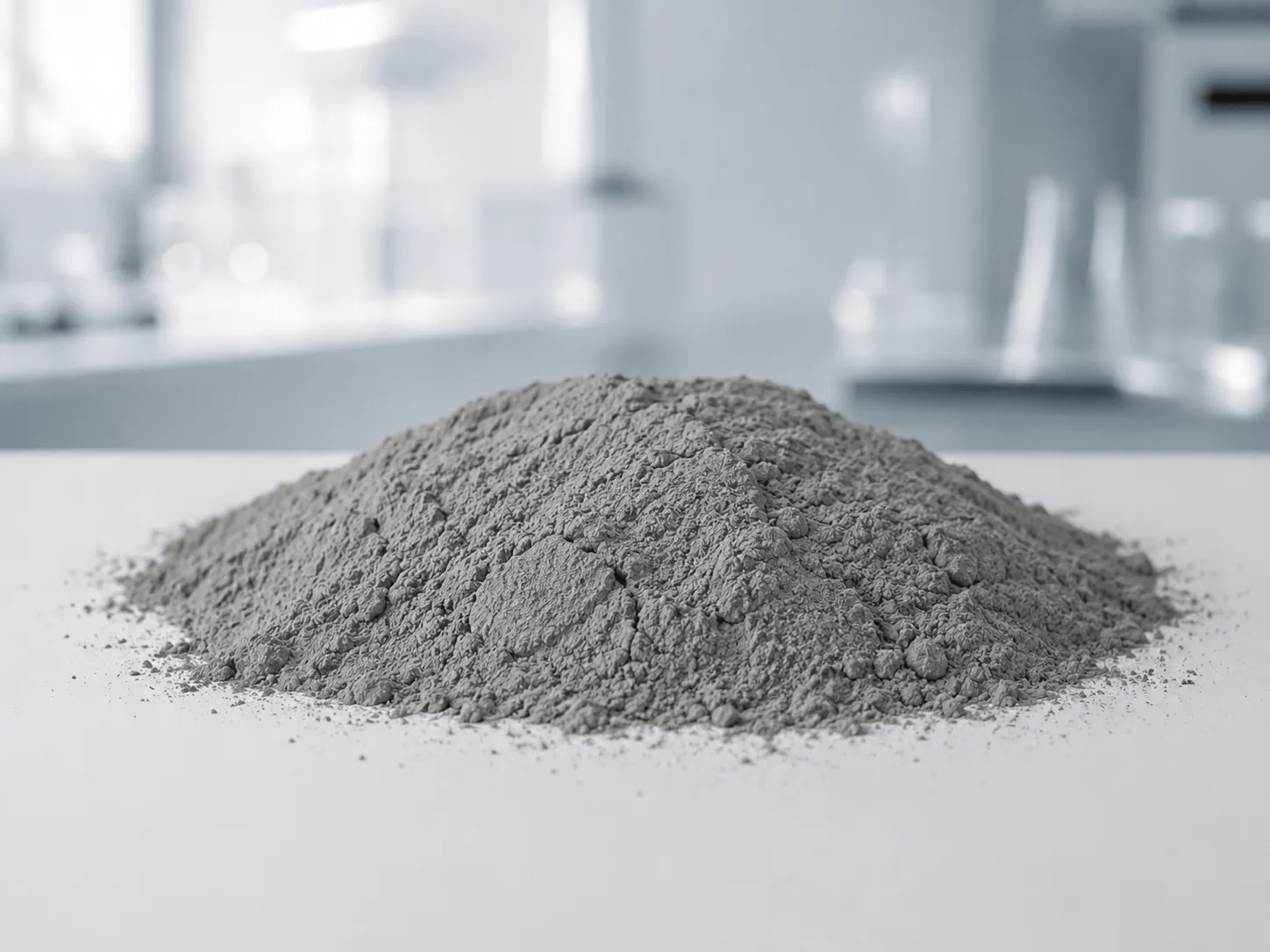
Silica fume is available in several physical forms, and choosing the right one can make a meaningful difference in material handling, transportation, storage, and mixing performance. In the market, buyers typically encounter three product descriptions: undensified silica fume, partially densified silica fume,…
Start from the application target, then match SiO2, moisture, LOI, bulk density and fineness.
Performance depends on formula, dosage, dispersion and site process, so sample testing is recommended.
For purchasing, check batch stability, COA support, packaging and long-term supply capability.
Silica fume is available in several physical forms, and choosing the right one can make a meaningful difference in material handling, transportation, storage, and mixing performance.
In the market, buyers typically encounter three product descriptions: undensified silica fume, partially densified silica fume, and densified silica fume.
Although all three originate from the same type of industrial by-product, they differ in bulk density, powder structure, and degree of agglomeration.
So, which form should you choose?
The answer depends less on which product has the highest bulk density and more on how the material will be handled and used in your production process.
This guide explains the differences, reviews the available technical evidence, and outlines what to consider when selecting silica fume for concrete, UHPC, refractory materials, and other industrial applications.
1. What Is the Difference Between Undensified, Partially Densified, and Densified Silica Fume?
Silica fume, also known as microsilica or condensed silica fume, is an ultrafine pozzolanic material collected during the production of silicon metal and ferrosilicon alloys in electric arc furnaces.
It consists primarily of amorphous silicon dioxide (SiO₂), with primary particles typically smaller than 1 micrometer.
After collection, silica fume can be supplied in different physical forms depending on whether and how extensively it has been densified.
Undensified Silica Fume
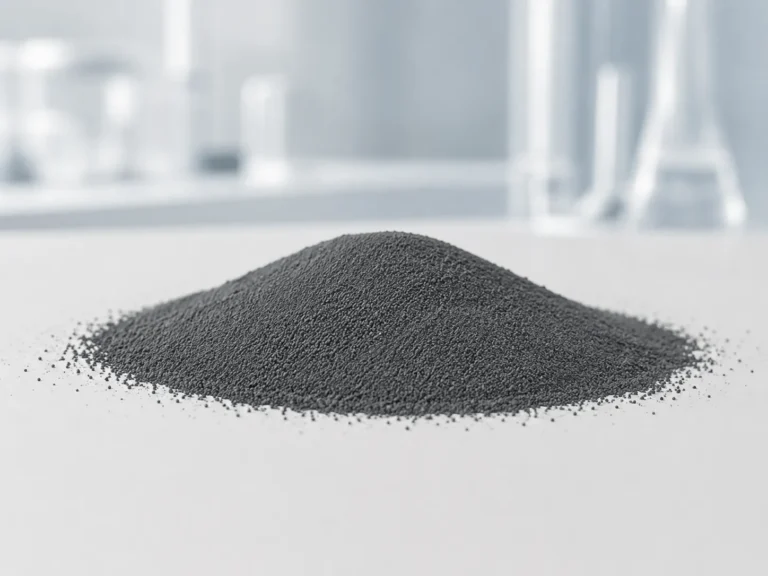
Undensified silica fume is the as-produced material collected from the furnace off-gas filtration system without additional densification.
It has a loose, fluffy structure and relatively low bulk density.
Key characteristics include:
- Low bulk density and high volume per unit of weight.
- Fine, loose powder structure.
- Greater transportation and storage volume requirements.
- Higher potential for airborne dust during handling.
- Often preferred for applications where easy initial dispersion is important.
Undensified silica fume is commonly used in specialty dry-mix products, prepackaged grouts, and repair mortars.
Partially Densified Silica Fume
Partially densified silica fume is produced by applying a controlled densification process to the original powder, but to a lesser extent than conventional densified silica fume.
It has an intermediate bulk density and a powder structure between undensified and fully densified products.
Key characteristics include:
- Higher bulk density than as-produced silica fume.
- Improved transportation and storage efficiency.
- Less compact agglomeration than some fully densified products.
- Potentially easier dispersion under certain mixing conditions.
The term “partially densified” is primarily a commercial product description rather than a separate grade defined by ASTM C1240.
For this reason, buyers should always request the supplier’s actual bulk density, test method, and product specifications rather than relying on the product name alone.
Densified Silica Fume
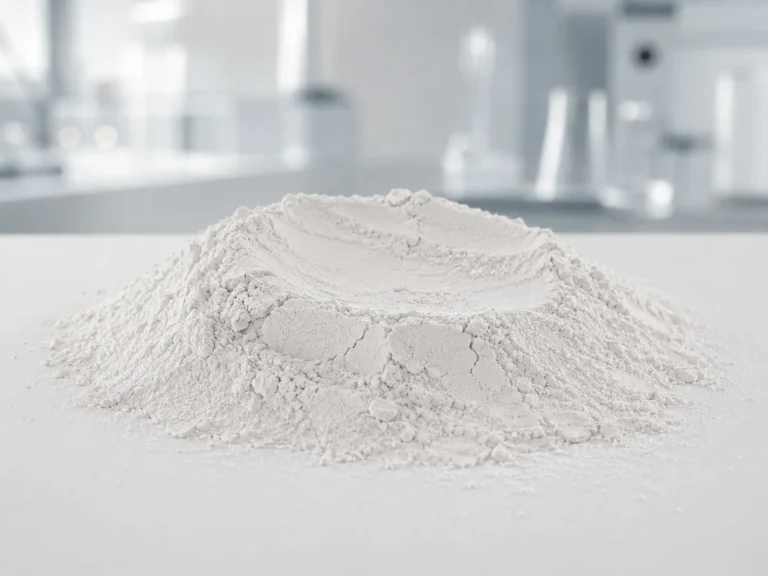
Densified silica fume is produced by processing undensified silica fume to increase its bulk density.
During a typical densification process, the powder is agitated or tumbled in a silo. Particle interactions cause the ultrafine silica fume particles to form relatively weak, reversible agglomerates.
This allows more material to fit into a given storage or shipping volume.
Key characteristics include:
- Significantly higher bulk density.
- Better transportation and storage efficiency.
- Lower dust generation in many handling operations, although dust control is still necessary.
- Good suitability for bulk handling and pneumatic conveying.
- Requires adequate mixing to break down agglomerates.
Densified silica fume is the most commonly used form in conventional concrete construction in the United States.
2. Bulk Density Comparison: Three Forms of Silica Fume
Bulk density is one of the most important differences between the three product forms.
According to the Silica Fume Association’s Silica Fume User’s Manual, typical bulk density ranges are:
- As-produced silica fume: 200–350 kg/m³ (12.5–21.9 lb/ft³).
- Densified silica fume: 450–700 kg/m³ (28.1–43.7 lb/ft³).
Partially densified silica fume generally falls between these forms, but there is no universally established density range for this commercial category.
Typical Product Comparison
| Property | Undensified | Partially Densified | Densified |
|---|---|---|---|
| Processing | As-produced | Partial densification | Densification |
| Bulk density | 200–350 kg/m³ | Supplier-specific intermediate range | 450–700 kg/m³ |
| Powder structure | Loose and fluffy | Moderately compacted | More compact agglomerates |
| Transportation efficiency | Low | Intermediate | High |
| Storage volume | High | Intermediate | Low |
| Dust handling | More challenging | Application-dependent | Generally easier |
| Dispersion requirements | Generally easier to incorporate in some systems | Depends on agglomeration | Requires adequate mixing |
Note: The density ranges for undensified and densified silica fume are representative values from the Silica Fume Association. Actual product values vary by source and processing conditions.
One important distinction: bulk density is not the same as particle density or chemical purity.
Densification reduces the air-filled space between particles and increases the mass of material that can occupy a given volume. It does not automatically increase the SiO₂ content or the intrinsic pozzolanic activity of the material.
3. How Does the Densification Process Work?
The main purpose of densification is to make silica fume easier and more economical to handle.
Because silica fume particles are extremely fine, freshly collected material contains substantial void space and has a very low bulk density.
During densification, the powder is subjected to controlled agitation.
Particle interactions and surface forces cause the ultrafine particles to form larger agglomerates.
These agglomerates are relatively weak and can be broken down during appropriate mixing.
The process generally involves:
- Collecting as-produced silica fume from the baghouse filtration system.
- Feeding the material into a densification system.
- Applying controlled agitation or tumbling.
- Increasing bulk density through particle agglomeration.
- Testing and packaging the finished product.
By controlling the processing conditions, manufacturers can produce different levels of densification.
However, achieving a target bulk density is only part of the process. The strength and dispersibility of the resulting agglomerates are also important quality considerations.
4. Does Densification Affect Silica Fume Quality or Concrete Performance?
This is one of the most common questions among concrete producers and material buyers.
A common assumption is that undensified silica fume must be more reactive because its powder structure is looser.
Another assumption is that densified silica fume may produce lower concrete strength because its particles have formed agglomerates.
Neither assumption is universally correct.
Chemical Composition Does Not Automatically Improve Through Densification
The chemical quality of silica fume depends primarily on its source and production conditions.
Important parameters include:
- SiO₂ content.
- Loss on ignition (LOI).
- Moisture content.
- Specific surface area.
- Oversize material.
- Pozzolanic activity.
Densification is primarily a physical processing step.
It does not inherently increase silica purity or change the underlying chemical composition.
Dispersion Is More Important Than Bulk Density Alone
In cement-based materials, silica fume contributes through two main mechanisms.
Microfiller effect
Its ultrafine particles fill spaces between larger cement grains, improving particle packing and helping refine the hardened cement paste.
Pozzolanic reaction
Amorphous silica reacts with calcium hydroxide produced during cement hydration to form additional calcium silicate hydrate (C-S-H).
These mechanisms depend on material quality and effective distribution throughout the cementitious matrix.
If large agglomerates remain intact, some of the silica fume may not be as effectively distributed as intended.
However, suitable mixing can break down the weak agglomerates formed during densification.
What Does Scientific Research Tell Us?
A peer-reviewed study published in Materials in 2020 investigated the performance of densified and undensified silica fume in ultra-high-performance fiber-reinforced concrete (UHPFRC).
The researchers compared the materials under controlled mixture proportions and mixing conditions.
The study found no significant differences in workability, compressive strength, flexural tensile strength, or hydration behavior between the densified and undensified products.
Both forms achieved excellent performance, with compressive strength exceeding 200 MPa under the study’s heat-treatment conditions.
The researchers attributed this result to the specific mixture design and mixing process, which effectively dispersed the agglomerated silica fume.
The key takeaway is that densified silica fume can perform just as well as undensified silica fume in properly designed and adequately mixed UHPC systems.
However, this finding should not be generalized to every concrete mixture or mixing system.
Other research by Diamond, Sahu, and Thaulow (2004) showed that some densified silica fume agglomerates may only partially break down during conventional concrete mixing.
This reinforces the importance of evaluating dispersion under actual production conditions.
5. How Does Bulk Density Affect Transportation and Storage Costs?
For silica fume buyers, one of the most obvious benefits of densification is improved logistics.
The lower the bulk density, the more space is required to transport and store the same amount of material.
Consider a simple example using one U.S. short ton (2,000 lb).
Assume the following representative bulk densities:
- Undensified silica fume: 17 lb/ft³.
- Partially densified silica fume: 25 lb/ft³.
- Densified silica fume: 36 lb/ft³.
Estimated Shipping Volume per U.S. Short Ton
| Parameter | Undensified | Partially Densified | Densified |
|---|---|---|---|
| Assumed bulk density | 17 lb/ft³ | 25 lb/ft³ | 36 lb/ft³ |
| Material weight | 2,000 lb | 2,000 lb | 2,000 lb |
| Estimated volume | 117.6 ft³ | 80.0 ft³ | 55.6 ft³ |
In this example, densified silica fume requires approximately 53% less volume than undensified silica fume for the same material weight.
This can offer significant advantages in:
- Bulk truck transportation.
- Containerized shipping.
- Warehouse storage.
- Silo capacity utilization.
- Material handling and unloading.
Actual freight savings depend on truck weight limits, container capacity, packaging, loading efficiency, and transportation distance.
For international shipments and long-distance domestic transportation, densification can be particularly valuable.
6. Does Silica Fume Density Affect Mixing and Workability?
Silica fume has an extremely high specific surface area, which can increase the cohesion of fresh concrete and influence its water demand.
However, these effects are primarily associated with the ultrafine nature of silica fume, not simply whether the product has been densified.
Undensified Silica Fume
Because it has not undergone a dedicated densification process, undensified silica fume may be easier to incorporate into certain low-energy mixing systems.
It can be useful where the mixing equipment cannot provide enough mechanical action to break down more compact agglomerates.
However, undensified silica fume can still form agglomerates during storage, transportation, and handling.
Partially Densified Silica Fume
Partially densified silica fume may offer a balance between handling efficiency and dispersion characteristics.
Its actual performance depends on the degree of densification and the strength of the agglomerates.
For manufacturers looking to improve handling without moving directly to a highly densified product, it may be worth evaluating.
Densified Silica Fume
Densified silica fume requires sufficient mixing energy to break down its agglomerates and distribute the particles throughout the mixture.
For conventional concrete, properly designed batching and mixing procedures generally provide suitable results.
For specialized applications, particularly those using low-energy mixing systems, additional mixing time or a different product form may be necessary.
The Silica Fume Association specifically notes that some dry-mix shotcrete and roof-tile mixing systems may not provide sufficient action to break down densified silica fume agglomerates.
In these situations, undensified silica fume may be more appropriate.
How Can You Improve Silica Fume Dispersion?
Regardless of product form, the following factors should be considered:
- Mixing sequence and material addition.
- Mixer type and available mixing energy.
- Mixing time.
- Water-to-cementitious-materials ratio.
- Compatibility with high-range water reducers.
- Uniformity of the final mixture.
For UHPC, high-shear or intensive mixing equipment and polycarboxylate-based superplasticizers can help achieve effective dispersion.
The appropriate mixing procedure should always be established through laboratory and production trials.
7. Which Type of Silica Fume Is Best for Your Application?
There is no single product form that is best for every application.
The right choice depends on the production process, mixing equipment, handling requirements, and performance targets.
Ready-Mix Concrete
Typical choice: Densified silica fume.
Ready-mix concrete producers generally benefit from the higher bulk density and improved handling characteristics of densified silica fume.
It is commonly used in:
- High-strength concrete.
- High-performance concrete.
- Bridge decks.
- Marine structures.
- Parking structures.
- Low-permeability concrete.
Bulk densified silica fume is particularly suitable for plants equipped with dedicated storage silos and pneumatic conveying systems.
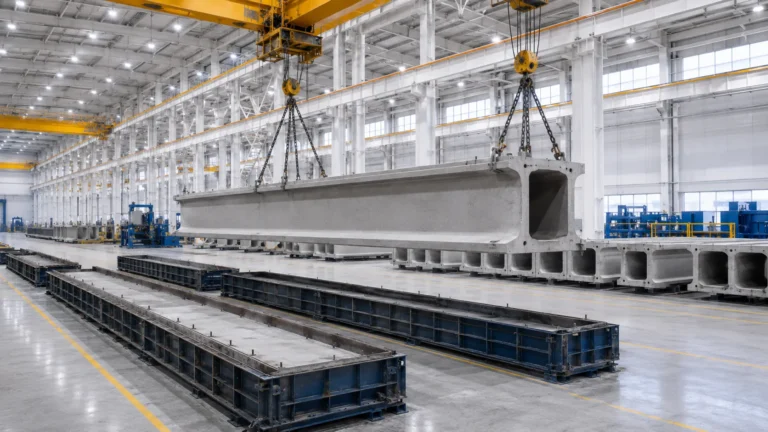
Precast Concrete
Typical choice: Densified silica fume.
Precast manufacturers often operate controlled production environments with established batching and mixing procedures.
Densified silica fume can provide logistical and handling advantages without compromising performance when adequately dispersed.
It is suitable for evaluating in:
- Precast beams and girders.
- Bridge components.
- Architectural precast.
- High-strength structural elements.
- Precast concrete segments.
Ultra-High-Performance Concrete (UHPC)
Typical choice: Densified or undensified, depending on the mixing system.
UHPC requires careful control of particle packing, water-to-powder ratio, and dispersion.
Undensified silica fume has traditionally been favored in some UHPC formulations because of its potential dispersion advantages.
However, research has demonstrated that densified silica fume can achieve comparable performance when suitable mixing procedures are used.
The selection should be based on actual mixture trials rather than assumptions about product form.
Repair Mortars and Cementitious Grouts
Typical choice: Undensified or partially densified silica fume.
Many prepackaged repair mortars and grouts use relatively simple mixing equipment and may not contain coarse aggregate.
In these applications, the ability to disperse fine particles effectively is especially important.
Undensified or partially densified silica fume may be worth evaluating, depending on the formulation and mixing process.
Shotcrete
Typical choice: Depends on the application method.
Both densified and undensified silica fume can be used in shotcrete.
However, the distinction between dry-mix and wet-mix shotcrete is important.
Some dry-mix systems may not provide sufficient mixing energy to break down densified silica fume agglomerates.
Undensified silica fume may be a better option in these cases.
For wet-mix shotcrete, densified silica fume can be suitable when the batching and mixing procedures provide adequate dispersion.
Refractory Castables
Typical choice: Based on formulation and mixing performance.
Silica fume is widely used in low-cement and ultra-low-cement refractory castables.
Its ultrafine particles help optimize particle packing and contribute to the development of a dense refractory structure.
Both densified and undensified forms may be suitable, depending on:
- Castable formulation.
- Water demand.
- Particle-size distribution.
- Dispersant compatibility.
- Mixing equipment.
- Flowability and casting requirements.
For refractory applications, product selection should be validated through castable-specific testing rather than relying solely on concrete performance data.
8. What Should You Check Before Buying Silica Fume?
Bulk density is important, but it should not be the only factor in a purchasing decision.
A reliable silica fume specification should address both chemical quality and physical performance.
Here are the key parameters to review.
| Parameter | Why It Matters |
|---|---|
| SiO₂ content | Indicates the main chemical component |
| Moisture content | Affects dry material content and storage stability |
| Loss on ignition (LOI) | Helps assess volatile and unburned carbon content |
| Specific surface area | Influences water demand and reactivity |
| Bulk density | Determines handling, storage, and transportation requirements |
| Oversize material | Helps assess coarse particles and agglomeration |
| Pozzolanic activity | Evaluates contribution to cementitious performance |
| Dispersion behavior | Helps determine suitability for the intended mixing process |
For concrete applications in the United States, ASTM C1240 is an important reference specification for silica fume used in cementitious mixtures.
ASTM C1240 also distinguishes densified and undensified silica fume as product descriptions.
For partially densified silica fume, buyers should request a specific bulk density range and clearly defined acceptance criteria in the purchase specification.
Before placing an order, consider requesting:
- A current Technical Data Sheet (TDS).
- A batch-specific Certificate of Analysis (COA).
- A Safety Data Sheet (SDS).
- Bulk density test results.
- Relevant application or performance test data.
For specialized applications, laboratory trials are strongly recommended.
9. Frequently Asked Questions
Is densified silica fume better than undensified silica fume?
Not necessarily. Densified silica fume offers better transportation and handling efficiency, while undensified silica fume may be easier to disperse in certain mixing systems. Both forms can provide excellent performance when properly selected and used.
What is partially densified silica fume?
Partially densified silica fume is silica fume that has undergone a controlled densification process but has not reached the bulk density of a conventional densified product. It is a commercial product description rather than a separate ASTM C1240 classification.
Does densification increase the SiO₂ content?
No. Densification primarily changes the physical packing and agglomeration of silica fume particles. It does not inherently increase the SiO₂ content or chemical purity.
What is the typical bulk density of densified silica fume?
According to the Silica Fume Association’s Silica Fume User’s Manual, densified silica fume typically has a bulk density of 450–700 kg/m³, or approximately 28.1–43.7 lb/ft³. Actual values vary by supplier and processing conditions.
Can densified silica fume be used in UHPC?
Yes. Research published in Materials in 2020 demonstrated that densified silica fume can be used in UHPFRC without significant differences in workability or mechanical performance compared with undensified silica fume under the study’s optimized mixing conditions.
Does undensified silica fume always disperse better?
No. Although undensified silica fume may have an advantage in some low-energy mixing systems, it can also form agglomerates during storage and handling. Dispersion depends on the product, mixture design, mixer, and mixing procedure.
Which type of silica fume is best for bulk transportation?
Densified silica fume is generally the most practical option for bulk transportation because its higher bulk density allows more material to be handled within a given volume.
10. Final Thoughts: Choose Silica Fume Based on Performance, Not Density Alone
Undensified, partially densified, and densified silica fume serve different handling and processing needs.
Undensified silica fume offers a loose powder structure and can be advantageous in applications where dispersion is a priority.
Partially densified silica fume provides an intermediate product option for buyers looking to balance handling efficiency and material characteristics.
Densified silica fume is generally the preferred choice for large-scale concrete production and bulk transportation because of its higher bulk density and improved handling efficiency.
But higher bulk density does not automatically mean higher quality or better concrete performance.
The best product is the one that meets your material specifications, works with your mixing equipment, and delivers consistent performance in your application.
Need Help Selecting the Right Silica Fume?
Choosing between undensified, partially densified, and densified silica fume depends on more than a single specification.
Whether you manufacture ready-mix concrete, precast components, UHPC, repair mortars, shotcrete, or refractory castables, the right product should match your technical requirements and production conditions.
Our team can help you evaluate silica fume specifications, compare bulk density and product forms, and identify a suitable option for your application.
Contact us to discuss your requirements or request product specifications and a quotation.
Technical References
- Silica Fume Association. Silica Fume User’s Manual, Second Edition. Technical guidance on silica fume properties, product forms, densification, handling, and mixing.
https://www.silicafume.org/pdf/silicafume-users-manual.pdf - ASTM International. ASTM C1240-20, Standard Specification for Silica Fume Used in Cementitious Mixtures.
https://store.astm.org/c1240-20.html - Kang, S.-H., Hong, S.-G., & Moon, J. (2020). Performance Comparison between Densified and Undensified Silica Fume in Ultra-High Performance Fiber-Reinforced Concrete. Materials, 13(17), 3901.
https://doi.org/10.3390/ma13173901 - Diamond, S., Sahu, S., & Thaulow, N. (2004). Reaction Products of Densified Silica Fume Agglomerates in Concrete. Cement and Concrete Research, 34(9), 1625–1632.
https://doi.org/10.1016/j.cemconres.2004.01.031