Key Answer
What this article covers
Silica fume affects particle packing, water demand, oxidation resistance, mullite formation, and slag corrosion in blast-furnace trough castables. The correct grade and dosage depend on the operating conditions of each trough zone.
Start from the application target, then match SiO2, moisture, LOI, bulk density and fineness.
Performance depends on formula, dosage, dispersion and site process, so sample testing is recommended.
For purchasing, check batch stability, COA support, packaging and long-term supply capability.
1. Why Different Trough Zones Require Different Material Designs
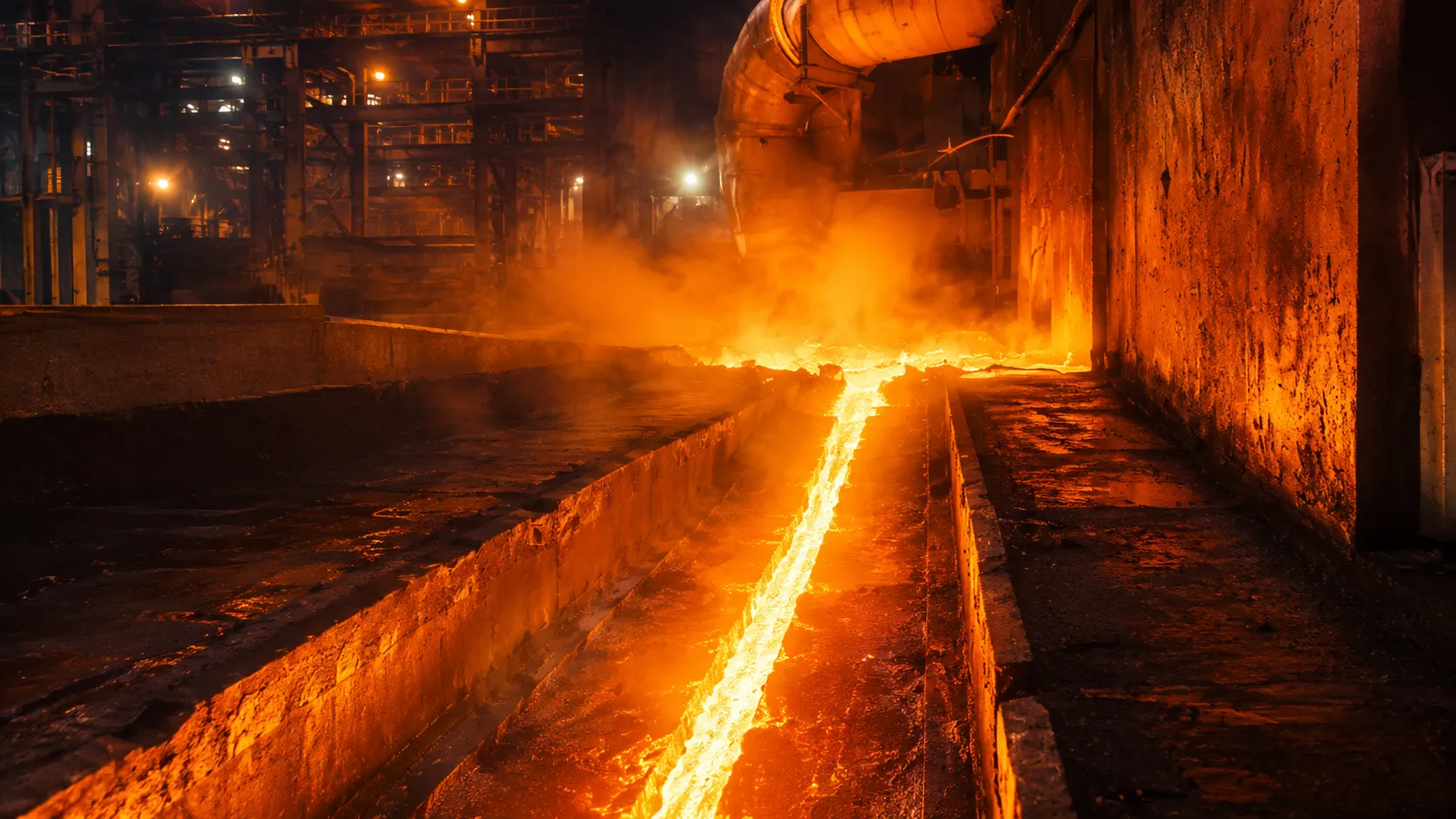
A blast-furnace casthouse trough system typically includes the taphole receiving zone, the main-trough impact zone, the middle and rear sections of the main trough, the skimmer, branch iron runners, slag runners, and the swing runner or tilting runner.
Although all these areas come into contact with high-temperature molten iron, slag, or both, their operating conditions differ significantly. Each zone experiences a different combination of:
- molten iron and slag exposure;
- flow velocity and turbulence;
- thermal cycling;
- mechanical impact;
- oxidation;
- maintenance frequency;
- repair method.
Studies of blast-furnace trough linings show that refractory wear does not result from mechanical erosion alone. Instead, fluid shear, thermal stress, oxidation, slag attack, penetration, and mass transfer act together.
Near the iron line of the main trough, carbon oxidation, SiC oxidation, and reactions at the iron–slag–refractory interface often dominate. At the slag line, slag dissolution, chemical penetration, and mass transfer usually have a greater influence.
The role of silica fume in blast-furnace trough castables therefore extends well beyond increasing strength.
Silica fume can:
- optimize particle-size distribution;
- reduce matrix porosity;
- lower installation water demand;
- influence liquid-phase formation;
- promote mullite formation;
- affect oxidation resistance;
- alter slag-corrosion behaviour.
Each trough zone requires a different balance between densification, erosion resistance, oxidation resistance, thermal-shock stability, and high-temperature liquid-phase control.
2. Main Functions of Silica Fume in Al₂O₃–SiC–C Trough Castables
2.1 Improving Particle Packing and Installation Performance
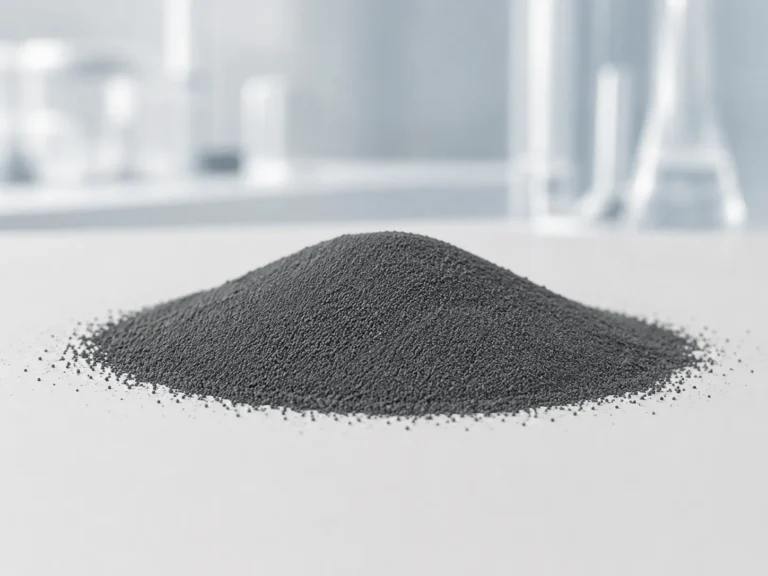
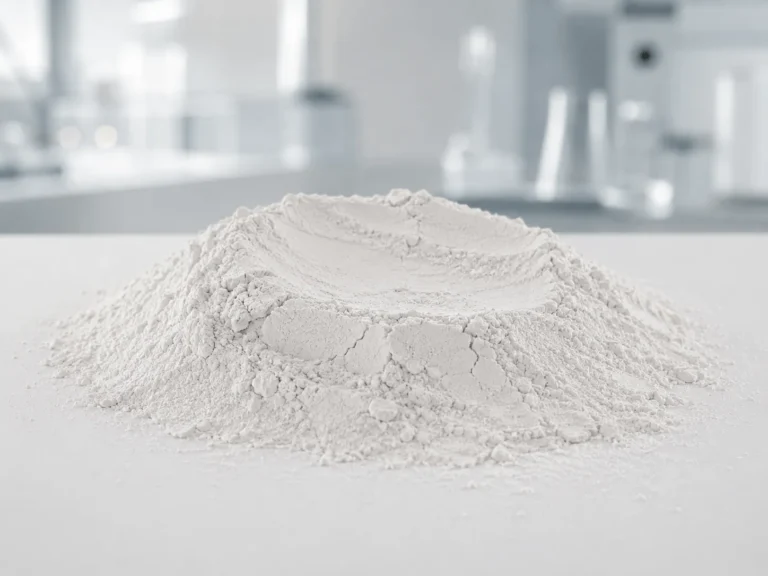
Silica fume consists mainly of submicron particles. In a properly designed matrix, these ultrafine particles fill the voids between fine corundum, reactive alumina, calcium aluminate cement, and other fine raw materials.
When the formulation provides adequate dispersion, silica fume can increase matrix packing density and reduce the amount of mixing water required to achieve the target flow.
An industrial study on blast-furnace trough castables reduced the water addition from 5.2% to 4.4% by optimizing particle-size distribution and the dispersant system while maintaining a similar flow value.
The lower water content produced:
- lower apparent porosity;
- a denser refractory structure;
- improved resistance to penetration;
- longer maintenance intervals in industrial main-trough service.
This result shows that the effectiveness of an ultrafine-powder system depends not only on chemical purity, but also on particle-size distribution, agglomeration, dispersant compatibility, and the design of the complete matrix.
2.2 Supporting High-Temperature Bonding and Oxidation Resistance
Research indicates that an appropriate silica fume addition in Al₂O₃–SiC–SiO₂–C castables can form a viscous SiO₂-rich liquid phase at elevated temperatures.
This liquid phase can react with Al₂O₃ to form mullite.
The SiO₂-rich phase may seal part of the open pore network and slow oxygen diffusion into the refractory. Mullite formation may also compensate for part of the sintering shrinkage through its associated volume change.
Together, these effects can improve oxidation resistance and strengthen the high-temperature ceramic bond.
However, increasing the silica fume content does not always improve performance.
Excessive or poorly dispersed silica fume may:
- increase water demand;
- promote excessive liquid-phase formation;
- lower the softening temperature of the matrix;
- cause excessive sintering;
- increase brittleness;
- reduce thermal-shock resistance.
The formulation must therefore control both the quantity of silica fume and its interaction with the other matrix components.
2.3 Why SiO₂ Purity Alone Is an Inadequate Selection Criterion
A 2023 study compared three silica fume products with nominal SiO₂ contents of 93%, 96%, and 99% in Al₂O₃–SiC–C trough castables.
Under the conditions of that study:
- the 99% silica fume required the most mixing water;
- the 99% grade produced the lowest bulk density;
- the same grade produced the highest apparent porosity and weakest oxidation resistance;
- the 93% grade produced the lowest hot flexural strength;
- the 96% grade delivered the best overall performance and slag resistance.
These results do not prove that all 99% silica fume products are unsuitable for blast-furnace trough refractories.
The three products differed not only in chemical composition, but also in particle-size distribution, agglomeration, impurity profile, and likely dispersion behaviour.
The study instead supports a broader conclusion: silica fume for trough castables must be evaluated through particle-size distribution, water demand, dispersibility, impurity composition, and high-temperature reaction behaviour—not through SiO₂ content alone.
3. Taphole Receiving and Main-Trough Impact Zones
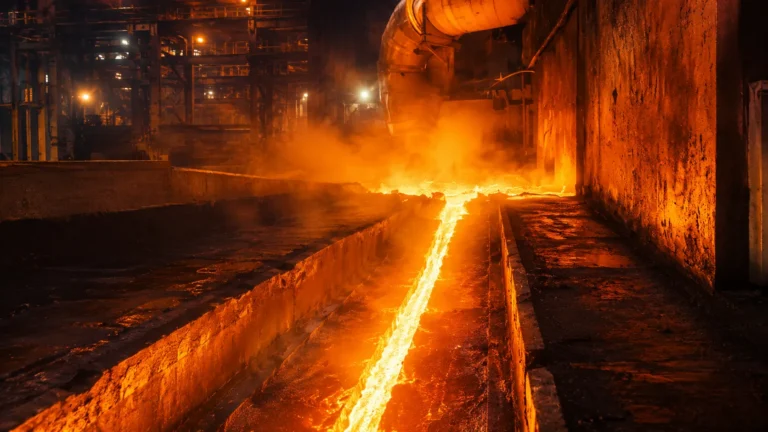
The front section of the main trough receives the direct impact of the molten iron and slag stream discharged from the taphole.
This area experiences some of the most severe operating conditions in the entire casthouse trough system.
Post-mortem studies commonly identify the region approximately 3–6 metres from the taphole as the turbulent or critical wear zone.
This zone may experience:
- direct impact from molten iron and slag;
- intense turbulence;
- entrained gas;
- repeated molten iron backflow;
- rapid temperature changes;
- strong bottom and sidewall erosion;
- cyclic thermal stress.
Computational fluid dynamics studies show that shear stress at the trough bottom often exceeds that at the sidewalls. Both shear stress and thermal stress rise sharply near the iron-drop point.
In one numerical study, the maximum thermal stress occurred approximately four metres from the front end of the main trough. This location broadly corresponded to the shortest-life region observed under industrial conditions.
Primary Functions of Silica Fume in the Impact Zone
In this zone, silica fume should help to:
- reduce installation water demand;
- increase matrix density;
- restrict molten iron penetration;
- improve aggregate-to-matrix bonding;
- reduce particle detachment under impact;
- support oxidation protection for carbon and SiC;
- promote suitable silicate and mullite bonding;
- maintain adequate castability around the bottom, corners, and sidewalls.
However, formulators should not pursue extremely low porosity or maximum sintering strength without considering other properties.
An excessively dense or heavily sintered matrix may:
- reduce steam-release capacity during dry-out;
- increase the risk of explosive spalling;
- generate higher thermal stresses;
- lose thermal-shock resistance;
- become brittle under repeated tapping cycles.
The impact-zone formulation must balance erosion resistance, oxidation resistance, thermal-shock stability, placement performance, and dry-out safety.
Simply increasing the silica fume content cannot achieve this balance.
4. Middle and Rear Sections of the Main Trough
Turbulence generally decreases in the middle and rear sections of the main trough. However, the refractory remains in contact with molten iron and slag for longer periods.
Engineers should evaluate the iron line, slag line, and trough bottom separately.
4.1 Iron-Line Region
The iron line lies close to the interface between molten iron, slag, and the refractory lining.
This region may experience:
- carbon oxidation;
- SiC oxidation;
- FeO attack;
- liquid penetration;
- interfacial reaction;
- repeated thermal loading.
Industrial post-mortem analyses have identified low-melting fayalite phases formed through reactions between FeO and SiO₂.
When the slag also contains elevated levels of alkalis such as K₂O, its viscosity and softening temperature may decrease. These changes can accelerate penetration, mass transfer, and SiC degradation.
At the iron line, silica fume can provide several benefits:
- densifying the matrix;
- reducing open penetration pathways;
- slowing oxygen and liquid ingress;
- promoting protective silicate or mullite bonding;
- improving matrix continuity.
However, excessive total SiO₂ may increase the risk of forming low-melting silicate phases when FeO, MnO, or alkali oxides penetrate the lining.
The formulation must therefore control:
- total SiO₂ from silica fume and other raw materials;
- FeO, MnO, and alkali-oxide reactions;
- the antioxidant system for SiC and carbon;
- matrix porosity;
- high-temperature liquid-phase quantity;
- liquid-phase viscosity.
4.2 Slag-Line Region
The slag line faces direct chemical attack from blast-furnace slag containing CaO, MgO, Al₂O₃, SiO₂, FeO, and alkali oxides.
Industrial post-mortem studies show that slag can react with Al₂O₃ and SiO₂ in the refractory to form calcium aluminosilicate phases such as anorthite and gehlenite.
Some reaction products have relatively low melting or softening temperatures. They can weaken the matrix and promote aggregate detachment.
At the slag line, silica fume performs two competing functions.
First, it reduces slag penetration by increasing matrix density and refining the pore structure.
Second, it introduces reactive SiO₂ into the slag–refractory reaction system.
The silica fume system must therefore balance:
- the physical benefit of densification;
- the chemical risk of low-melting phase formation;
- slag viscosity;
- slag basicity;
- FeO content;
- alkali content;
- service temperature.
Room-temperature strength alone cannot predict slag-line performance.
For slags with high FeO content, elevated alkali levels, or large composition fluctuations, laboratories should conduct relevant corrosion tests using representative industrial slag.
Suitable methods may include:
- static crucible testing;
- rotary slag testing;
- dynamic erosion testing;
- post-test phase and penetration analysis.
5. Skimmer and Adjacent Transition Zones
The skimmer allows denser molten iron to flow beneath the refractory structure while directing the slag into the slag runner.
The area upstream of the skimmer often experiences liquid accumulation, backflow, and turbulence. Downstream, the molten iron may accelerate, change direction, and cause concentrated local erosion.
Flow-field studies show that the skimmer area can develop significant turbulence.
The following structural variables can influence wall shear stress, slag–iron separation, and skimmer service life:
- skimmer angle;
- opening height;
- immersion depth;
- distance from the slag outlet;
- surrounding trough geometry.
Functions of Silica Fume Around the Skimmer
In this area, silica fume should help to:
- improve castable flow around complex shapes;
- reduce porosity around openings and corners;
- improve the integrity of precast joints;
- restrict slag and molten iron penetration;
- strengthen the bond between repair material and the remaining lining;
- reduce weak zones caused by poor placement.
However, a high-strength main-trough castable cannot automatically replace a purpose-designed skimmer material.
Skimmer performance also depends on:
- structural design;
- precast component dimensions;
- hot flexural strength;
- thermal-shock resistance;
- joint design;
- installation quality.
The silica fume system represents only one part of the overall material and structural design.
6. Branch Iron Runners
After passing beneath the skimmer, molten iron enters the branch iron runners. At this stage, the slag content usually decreases significantly, and molten iron becomes the main corrosive medium.
Typical damage mechanisms include:
- continuous molten iron erosion;
- local wear at bends and flow-dividing points;
- repeated heating and cooling;
- molten iron penetration;
- oxidation during shutdowns;
- mechanical damage during maintenance.
Few published studies directly compare different silica fume systems in industrial branch iron runners. The following recommendations therefore represent engineering analysis based on main-trough mechanisms and branch-runner operating conditions.
In branch iron runners, silica fume should primarily:
- improve matrix density;
- reduce installation water demand;
- produce a more uniform lining;
- restrict molten iron penetration;
- support oxidation resistance;
- maintain stable volume behaviour.
Formulators should avoid generating excessive liquid phase solely to increase sintering strength.
Repeated tapping and shutdown cycles require sufficient thermal-shock stability. A heavily sintered or brittle matrix may crack and spall under these conditions.
At bends, drops, and flow-dividing points, the formulation should place additional emphasis on aggregate grading, impact resistance, and matrix erosion resistance.
Compared with a main slag runner, a branch iron runner may prioritize low water demand, stable dispersion, penetration resistance, oxidation protection, and volume stability rather than maximum slag-corrosion resistance.
7. Slag Runners
Slag runners transport blast-furnace slag away from the skimmer.
Although the slag temperature may be lower than the temperature of freshly tapped molten iron, the extensive contact between slag and refractory can cause severe chemical corrosion.
Al₂O₃–SiC–C castables remain widely used in both main troughs and slag runners because SiC and carbon offer:
- low wettability by molten slag;
- good thermal-shock resistance;
- resistance to erosion;
- reduced slag penetration.
Functions of Silica Fume in Slag Runners
In slag-runner castables, silica fume should help to:
- form a dense matrix;
- slow slag penetration through pores and microcracks;
- improve castability and surface integrity;
- promote a controlled amount of mullite or ceramic bonding;
- improve structural stability at high temperatures;
- limit the formation of low-melting phases involving CaO, MgO, FeO, or alkalis.
In the 2023 comparative study, the specific 96% silica fume product provided the best slag resistance among the three tested grades.
Again, this does not mean that 96% SiO₂ represents a universally optimal specification.
It shows that slag-runner silica fume should be selected according to overall performance, including dispersion, water demand, matrix density, oxidation behaviour, hot strength, and reaction with the actual slag.
8. Swing Runners and Tilting Runners
A swing runner or tilting runner transfers molten iron into a torpedo ladle, hot-metal ladle, or other receiving vessel.
In addition to molten iron erosion, this component may experience:
- tilting movement;
- vibration;
- intermittent pouring;
- impact caused by vertical drops;
- frequent temperature changes;
- localized mechanical stress.
Stress often concentrates near the pivot, runner outlet, bends, and molten iron impact point.
Published research specifically comparing silica fume systems in swing runners remains limited. It would therefore be inappropriate to claim that a particular silica fume grade or fixed dosage has received universal scientific confirmation for this application.
From an engineering perspective, silica fume should:
- reduce installation water demand;
- improve early structural integrity;
- increase matrix uniformity;
- restrict molten iron penetration;
- reduce localized erosion;
- improve placement around bends and weak structural points;
- work with aggregate grading and antioxidants to balance erosion resistance and thermal-shock stability.
Excessive sintering and matrix embrittlement present particular risks in this application.
Evaluation should therefore include:
- residual strength after thermal shock;
- dynamic erosion resistance;
- vibration resistance;
- volume stability;
- integrity around outlets and bends.
9. Principles for Selecting Silica Fume for Blast-Furnace Trough Castables
9.1 Do Not Use SiO₂ Purity as the Sole Criterion
High SiO₂ purity does not automatically produce:
- lower water demand;
- higher bulk density;
- better dispersion;
- stronger oxidation resistance;
- improved slag resistance.
Product evaluation should also cover:
- particle-size distribution;
- specific surface area;
- agglomeration state;
- moisture content;
- loss on ignition;
- carbon content;
- alkali impurities;
- batch consistency.
9.2 Control Total SiO₂ and Liquid-Phase Formation by Zone
The impact zone requires a dense structure with strong resistance to erosion, impact, and oxidation.
The slag line requires stricter control of low-melting reaction products.
Branch iron runners, swing runners, and tilting runners place greater emphasis on molten iron penetration resistance, thermal-shock stability, dry-out safety, and volume stability.
A single matrix design should not be applied mechanically to every trough zone.
9.3 Evaluate Silica Fume as Part of the Complete Matrix
The effectiveness of silica fume depends on its interaction with:
- reactive alumina;
- calcium aluminate cement;
- SiC;
- carbon sources;
- metallic silicon;
- B₄C;
- other antioxidants;
- dispersants;
- total mixing-water content.
Discussing an “optimal silica fume” without considering the complete matrix has little scientific or practical value.
9.4 Determine the Addition Rate Through Representative Testing
A fixed silica fume dosage from one research paper cannot be applied directly to every steel plant, trough design, or operating condition.
A laboratory evaluation should include, at a minimum:
- flow value at different water additions;
- bulk density;
- apparent porosity;
- cold mechanical strength;
- hot modulus of rupture;
- oxidation resistance;
- residual strength after thermal shock;
- slag-corrosion resistance;
- dynamic erosion resistance;
- dry-out safety.
Industrial trials should also consider:
- actual slag chemistry;
- hot-metal temperature;
- tapping duration;
- tapping frequency;
- repair cycle;
- maintenance method.
Conclusion
The value of silica fume in blast-furnace trough castables lies in its ability to regulate both matrix structure and high-temperature reaction behaviour.
Properly selected and dispersed silica fume can:
- improve particle packing;
- reduce installation water demand;
- increase matrix density;
- restrict penetration;
- support ceramic bonding;
- promote controlled mullite formation;
- improve oxidation resistance.
However, silica fume also changes the total SiO₂ content and liquid-phase composition of the refractory system.
When FeO, CaO, MgO, MnO, or alkali oxides penetrate the lining, excessive or poorly balanced SiO₂ may contribute to the formation of low-melting phases.
The taphole receiving zone, main-trough impact zone, iron line, slag line, skimmer, branch iron runners, slag runners, and swing or tilting runners should therefore receive separate material designs.
No single high-purity silica fume grade can meet every operating requirement.
The most reliable selection criterion is not the highest SiO₂ content or the highest room-temperature strength. It is the ability of the complete castable system to maintain low permeability, controlled oxidation, stable hot strength, adequate thermal-shock resistance, safe dry-out behaviour, and a predictable wear rate under the actual slag chemistry, hot-metal temperature, tapping schedule, and maintenance cycle.
Key References
- Darban, S., et al. “Corrosion Mechanisms of Al₂O₃–SiC–C Refractory Castables by Iron and Slag Based on Post-Mortem Analysis of Industrial Samples.” Open Ceramics, 2023, Article 100453.
- Cao, Z., et al. “Effect of Different Silica Fumes on the Properties of Al₂O₃–SiC–C Castables for Iron Troughs.” China’s Refractories, 2023, 32(2): 31–36.
- Liu, G., et al. “The Effect of Microsilica on the Oxidation Resistance of Al₂O₃–SiC–SiO₂–C Castables with Si and B₄C Additives.” Ceramics International, 2016.
- Yao, H., et al. “Numerical Analysis on Erosion and Optimization of a Blast Furnace Main Trough.” Materials, 2021, 14: 4851.
- Ranjan, S., et al. “Review and Analysis of Metallurgical Processes in Blast Furnace Main Trough and Trough Performances.” Transactions of the Indian Institute of Metals, 2022, 75: 589–611.
- Domiciano, V. G., et al. “Challenges of the Blast Furnace Casthouse: Failure Analysis of Main Runner Refractory Castable.” UNITECR Conference Proceedings.
- Chang, C. M., et al. “Numerical Analysis on the Refractory Wear of the Blast Furnace Main Trough.” Advances in Science and Technology, 2014, 92: 294–300.