Key Answer
What this article covers
Silica fume can improve UHPC particle packing, pore structure, hydration, and fiber–matrix bonding. Its actual value depends on dispersion, rheology, superplasticizer compatibility, and dosage.
Start from the application target, then match SiO2, moisture, LOI, bulk density and fineness.
Performance depends on formula, dosage, dispersion and site process, so sample testing is recommended.
For purchasing, check batch stability, COA support, packaging and long-term supply capability.
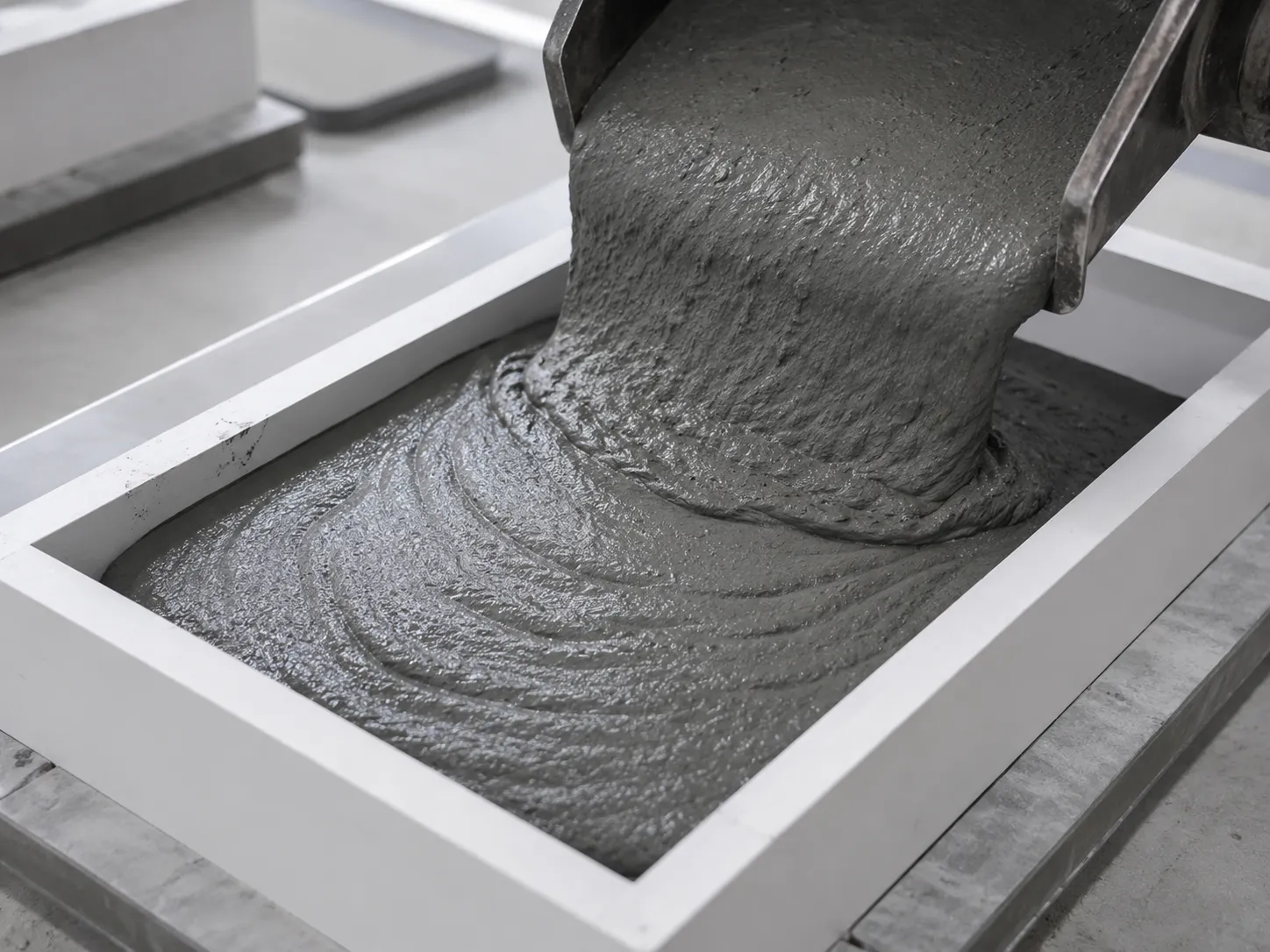
Silica fume affects much more than compressive strength in ultra-high-performance concrete (UHPC). It changes particle packing, paste rheology, hydration kinetics, pore structure, steel-fiber dispersion, and the fiber–matrix interface.
The dosage ranges reported in research should serve only as an initial screening framework. Manufacturers must verify the selected silica fume grade and dosage using the project’s actual cement, quartz powder, sand, superplasticizer, mixing sequence, steel fibers, and curing conditions.
1. The Conditional Ball-Bearing Effect of Submicron Particles
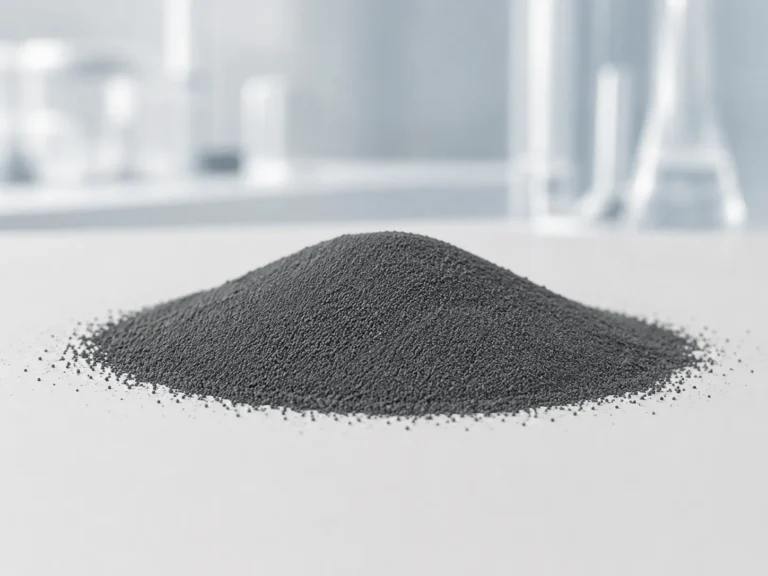
Silica fume consists mainly of ultrafine, amorphous silica particles. Its primary particles are much smaller than ordinary cement grains and generally have a near-spherical morphology.
When the mixing process effectively breaks down agglomerates and distributes the particles uniformly, silica fume can enter the spaces between cement grains. Under shear, these fine particles may reduce part of the friction between larger particles and create a lubricating or ball-bearing effect.
This effect can help to:
- reduce internal friction within the particle system;
- improve the flow of mixtures with very low water-to-binder ratios;
- limit local flocculation and particle bridging;
- improve the paste’s ability to coat quartz sand and steel fibers;
- support more uniform placement.
However, silica fume does not produce this effect automatically.
Wang et al. reported that silica fume products with lower internal particle porosity, higher bulk density, a broader and more suitable particle-size distribution, and lower carbon content generally supported better UHPC flowability through combined filling, rolling, and plasticizing effects.
For UHPC, the rheological value of silica fume therefore depends on more than average particle size. It also depends on:
- primary particle morphology;
- degree of agglomeration;
- particle-size distribution;
- bulk density;
- carbon content;
- compatibility with the superplasticizer.
Severely agglomerated silica fume may enter the mixer as relatively large clusters rather than as dispersed submicron particles. These clusters cannot effectively fill fine voids or provide meaningful lubrication.
Instead, they may:
- increase water demand;
- raise plastic viscosity;
- reduce flow retention;
- interfere with polycarboxylate-ether superplasticizer adsorption;
- create weak, silica-rich agglomerates within the hardened matrix.
A more accurate conclusion is therefore:
Properly dispersed, near-spherical ultrafine particles can improve lubrication and flow when their particle-size distribution complements the other UHPC powders.
The finest silica fume does not necessarily provide the strongest ball-bearing effect.
2. Filling Micrometre- and Submicrometre-Scale Voids
The high strength and durability of UHPC depend heavily on a dense, multiscale particle-packing structure.
In a typical UHPC formulation:
- quartz sand forms the fine-aggregate skeleton;
- cement and quartz powder fill the larger voids within that skeleton;
- silica fume fills finer voids between cement and quartz-powder particles.
Silica fume therefore does more than add another reactive powder. It helps fill particle-size ranges that cement, quartz powder, and fine sand cannot fill efficiently on their own.
This brings the actual particle-size distribution closer to a continuous packing curve.
Particle-Packing Models
UHPC designers often use particle-packing models such as the Modified Andreasen and Andersen model to optimize the proportions of cement, silica fume, quartz powder, and fine aggregate.
Within such models, silica fume can:
- improve the fit between the actual grading curve and the target curve;
- reduce calculated residual voids;
- improve the continuity of the powder fraction;
- limit oversized gaps between adjacent particle-size classes.
Improved gradation can produce several practical benefits.
First, it reduces the volume of initial voids that water and paste must fill.
Second, it creates a more continuous solid structure at the same water-to-binder ratio.
Third, it limits local weak zones and large capillary defects.
Fourth, it provides a more uniform space for hydration products to form.
Why Theoretical Packing Is Not Enough
A high calculated dry-packing density does not guarantee better UHPC performance.
The actual wet-packing condition also depends on:
- water-film thickness;
- superplasticizer adsorption;
- powder agglomeration;
- mixing energy;
- entrapped air;
- paste viscosity;
- steel-fiber disturbance;
- the sequence in which materials enter the mixer.
For this reason, particle-packing calculations must be combined with rheological testing, spread-flow measurements, air-content testing, and mechanical-property verification.
A theoretically dense formulation may still perform poorly if the silica fume does not disperse or if the paste cannot flow around the steel fibers.
3. Microfilling, Nucleation, and Pozzolanic Reaction
Silica fume influences the UHPC microstructure through several mechanisms. These mechanisms interact, but they do not occur at exactly the same time.
3.1 Physical Microfilling
During mixing and placement, silica fume first acts as a physical filler.
Its ultrafine particles enter the voids between cement and quartz-powder particles, reducing the space available for initial pores, capillary channels, and local defects.
This physical effect begins before extensive hydration or pozzolanic reaction occurs.
3.2 Nucleation Effect
Well-dispersed silica fume particles provide additional surfaces on which cement hydration products can precipitate.
These nucleation sites may promote the formation of calcium silicate hydrate and accelerate early hydration.
Research also indicates that silica fume can interact strongly with polycarboxylate-based superplasticizers. Its high surface area and preferential admixture adsorption can alter the induction period, early heat release, and hydration kinetics of UHPC paste.
The effect may be beneficial or detrimental depending on the dosage and admixture compatibility.
3.3 Pozzolanic Reaction
During later hydration stages, the amorphous SiO₂ in silica fume reacts with calcium hydroxide released by cement hydration.
This pozzolanic reaction forms additional calcium silicate hydrate.
The reaction can:
- consume part of the relatively weak calcium hydroxide phase;
- refine the pore structure;
- reduce matrix permeability;
- improve the interfacial transition zones;
- increase later-age matrix density.
A 2024 study used inert titanium dioxide as a control material to distinguish the physical effects of silica fume from its chemical contribution.
The findings showed that silica fume does not improve UHPC solely through pozzolanic activity. Physical filling, nucleation, superplasticizer adsorption, and later-age chemical reactions contribute differently at different ages.
Why More Silica Fume Does Not Always Increase Strength
UHPC contains very little free water. As a result, the formulation may not provide enough effective water for all cement and silica fume particles to react fully.
When cement hydration becomes water-limited or silica fume remains agglomerated, excess silica fume may act mainly as a high-surface-area filler.
It may then:
- increase water and superplasticizer demand;
- restrict cement hydration;
- raise paste viscosity;
- increase autogenous shrinkage;
- reduce the effectiveness of fiber dispersion;
- provide little additional pozzolanic benefit.
Increasing the silica fume content therefore does not guarantee a continuous increase in strength or durability.
4. Steel-Fiber Dispersion and Fiber–Matrix Bond
The tensile strength, flexural strength, and post-cracking load capacity of UHPC depend not only on steel-fiber content, but also on fiber distribution, orientation, and bond with the surrounding matrix.
Silica fume can improve the fiber–matrix interface by:
- refining the pores around the fibers;
- increasing local matrix density;
- reducing weak interfacial zones;
- increasing frictional resistance;
- improving mechanical interlock;
- restricting fluid penetration along the interface.
However, silica fume also changes paste yield stress and plastic viscosity.
These rheological changes directly influence how steel fibers move and orient during mixing and placement.
Paste Viscosity Must Remain Within a Workable Range
If the paste viscosity is too low:
- steel fibers may settle;
- fibers may orient excessively with the flow;
- the mixture may segregate;
- the fiber distribution may vary through the depth of the element.
If the paste viscosity is too high:
- fibers may form clusters;
- entrapped air may become difficult to release;
- spread flow may decrease;
- the mixer may not distribute the fibers uniformly;
- casting around congested reinforcement may become difficult.
Wu, Khayat, and Shi investigated UHPC containing 0–25% silica fume by mass of cementitious materials.
Under their specific material and formulation conditions, mixtures containing approximately 10–15% silica fume achieved stronger fiber–matrix bonding and better flexural and tensile performance.
The researchers associated this range with relatively low paste viscosity and more uniform steel-fiber distribution.
Another study reported that 20% silica fume improved mechanical performance, reduced the chloride-ion diffusion coefficient, and strengthened the interaction between steel fibers and the matrix in its specific UHPC system.
These results do not conflict.
They show that UHPC has no universal silica fume dosage that remains optimal across all raw materials and production conditions.
The optimum depends on:
- cement chemistry and fineness;
- quartz-powder particle size;
- sand gradation;
- water-to-binder ratio;
- superplasticizer chemistry;
- steel-fiber dimensions and dosage;
- mixing energy;
- placement method;
- curing regime.
5. Why SiO₂ Content Alone Cannot Determine UHPC Suitability
Standards such as ASTM C1240 provide useful baseline quality requirements for silica fume used in cementitious materials.
However, general compliance does not automatically confirm that a silica fume product will perform well in a specific UHPC formulation.
UHPC producers should also evaluate the following properties.
5.1 Particle-Size Distribution and Particle Porosity
The silica fume particle-size distribution should complement the existing cement and quartz-powder grading.
An unsuitable distribution may contribute little to packing efficiency, even when the material has high SiO₂ content.
5.2 Primary Particle Morphology and Agglomeration
The production process and collection conditions can influence the size and strength of silica fume agglomerates.
The selected mixing equipment must be capable of breaking down these agglomerates sufficiently for the intended formulation.
5.3 Densification State and Bulk Density
Densified and undensified silica fume behave differently during transport, feeding, wetting, and mixing.
The most suitable form depends on:
- the feeding system;
- mixer type;
- mixing energy;
- production cycle;
- dust-control requirements;
- required dispersion speed.
A higher bulk density may improve handling, but excessive densification may make rapid wetting and deagglomeration more difficult in some mixers.
5.4 Loss on Ignition and Carbon Content
Residual carbon may adsorb chemical admixtures and change their effective dosage.
High or unstable carbon content can affect:
- superplasticizer efficiency;
- flow retention;
- air content;
- air-entraining admixture response;
- batch consistency.
5.5 Compatibility with PCE Superplasticizers
The same silica fume may produce very different flow and flow-retention results when combined with different polycarboxylate-ether systems.
Compatibility testing should consider:
- initial spread flow;
- spread-flow retention;
- yield stress;
- plastic viscosity;
- required PCE dosage;
- mixing time;
- temperature sensitivity.
5.6 Batch-to-Batch Consistency
UHPC contains large quantities of fine powders and operates at an extremely low water-to-binder ratio.
This makes the formulation highly sensitive to small raw-material variations.
Minor changes in silica fume moisture, agglomeration, carbon content, or particle distribution may cause amplified changes in rheology, mixing time, air content, and strength.
5.7 Early Hydration, Heat Release, and Autogenous Shrinkage
The nucleation effect of silica fume may accelerate early hydration and increase the rate of heat release.
At the same time, a highly refined pore structure and low internal relative humidity may increase the risk of autogenous shrinkage and early-age cracking.
The producer should therefore evaluate not only strength, but also:
- hydration heat;
- setting behaviour;
- internal temperature rise;
- autogenous shrinkage;
- early-age cracking sensitivity.
6. A More Reliable UHPC Evaluation Programme
UHPC manufacturers should not evaluate silica fume only through a chemical analysis certificate.
They should test it within the actual UHPC formulation at several levels.
6.1 Particle-Packing Verification
Measure the actual particle-size distributions of:
- cement;
- silica fume;
- quartz powder;
- quartz sand;
- other mineral powders.
Enter these distributions into a suitable particle-packing model and compare:
- the fit to the target grading curve;
- the predicted void ratio;
- the effect of different silica fume dosages;
- the overlap or gaps between particle-size classes.
The model should support formulation screening rather than replace physical testing.
6.2 Rheological Verification
Spread flow alone cannot fully describe UHPC workability.
The test programme should also examine:
- static and dynamic yield stress;
- plastic viscosity;
- spread-flow retention;
- thixotropic recovery;
- mixing torque;
- temperature sensitivity;
- response to delayed fiber addition.
Two mixtures may have the same initial spread flow but completely different viscosities, casting behaviour, and fiber distributions.
6.3 Steel-Fiber Distribution Verification
Producers should verify whether the fibers show:
- clustering;
- settlement;
- excessive directional alignment;
- local fiber-deficient zones;
- variations through the member depth.
Suitable methods include:
- sectioning hardened specimens;
- image analysis;
- X-ray or CT analysis where available;
- sampling from different locations;
- comparing fiber counts at different depths.
6.4 Comprehensive Performance Verification
A complete evaluation should include more than 28-day compressive strength.
Recommended tests include:
- compressive strength;
- flexural strength;
- direct or indirect tensile performance;
- post-cracking behaviour;
- fiber pull-out resistance;
- air content;
- autogenous shrinkage;
- drying shrinkage where relevant;
- heat of hydration;
- chloride-ion penetration or diffusion;
- water absorption;
- permeability;
- freeze–thaw or thermal exposure where required.
The selected silica fume should improve the balance of fresh and hardened properties, not one isolated test result.
Conclusion
The value of silica fume in UHPC does not lie simply in increasing the amorphous SiO₂ content or creating a vaguely defined “nano-ball effect.”
Silica fume participates in a multiscale material-design process.
It can:
- influence rheology through the movement of dispersed ultrafine particles;
- optimize particle packing by filling missing size ranges;
- reduce initial defects through physical microfilling;
- provide nucleation surfaces for hydration products;
- form additional calcium silicate hydrate through pozzolanic reaction;
- refine the steel fiber–matrix interface;
- affect fiber dispersion and orientation through changes in paste viscosity.
A suitable UHPC-grade silica fume should therefore provide more than high purity or high specific surface area.
It should offer:
- a particle-size distribution that complements the other powders;
- a controllable agglomeration state;
- reliable compatibility with the selected PCE superplasticizer;
- stable batch-to-batch performance;
- dispersion behaviour suited to the actual mixer and production process.
UHPC does not necessarily require the silica fume with the highest specification.
It requires a silica fume that produces the best balance of particle packing, rheology, hydration, fiber distribution, strength, shrinkage, and durability within the actual mix design.